Prologue
Dawn
It was 1979. I remember the bridge was falling apart.
That is the first thing. Not the soldiers, not the river underneath, not the sky. The Lo Wu bridge between Shenzhen and Hong Kong was shabby, patched, worn down by all the feet that had crossed it before mine. It did not look like the door to anything.
I had bags in both hands. Big bags, small bags, the kind of luggage people carried in those days. Nobody had a suitcase with wheels. I don’t think I had ever seen one.
And against my chest, the violin.
I walked to the middle of the bridge, where the line was, and I stopped. It was a border. A real one. On one side was everything I had ever known. On the other side was a place we had always been told would “devour people, bones and all.”
I stood there with my bags and my violin and I did not move my feet.
I looked back once. On the bridgehead behind me there was a couplet, big characters, the kind you saw everywhere then: Love your hometown. Defend the motherland.
I have told this story more than once, and I have not always put the two halves in the same order. Maybe it was “Defend your hometown. Love the motherland.” Nearly fifty years is a long time for an old man’s memory. But I remember reading it. I remember thinking it was a strange thing to read at the exact moment you were leaving.
A soldier of the People’s Liberation Army stood on our side. Grass-green uniform. His clothes looked thin and poor, and so did his patience. He barked at me to hurry up and get moving.
On the other side stood a policewoman in a black wool uniform. She smiled at me. Then she pointed, very calmly, at the way I was supposed to walk.
I want you to picture this, because I still can. One uniform shouting, one uniform smiling. Same bridge. A few steps apart.
I didn’t have the words for it then. I only knew which way my feet wanted to go.
So I went.
The thickest paper in the world
In my hand I held a travel pass printed in both Chinese and English. The Chinese was in traditional characters, which I hadn’t seen in a long time.
And the paper. I had never, in my whole life, held paper that thick. Back home, paper was thin and grey. This was a document from another world, and I handled it with great care.
Was I a visitor? Officially, yes. People in my situation went to Hong Kong “to visit relatives.” Some went “to claim an inheritance.” Those were the words that got you through the stamps and the offices and the waiting. I’ll tell you later how the inheritance turned out. (Laughs.)
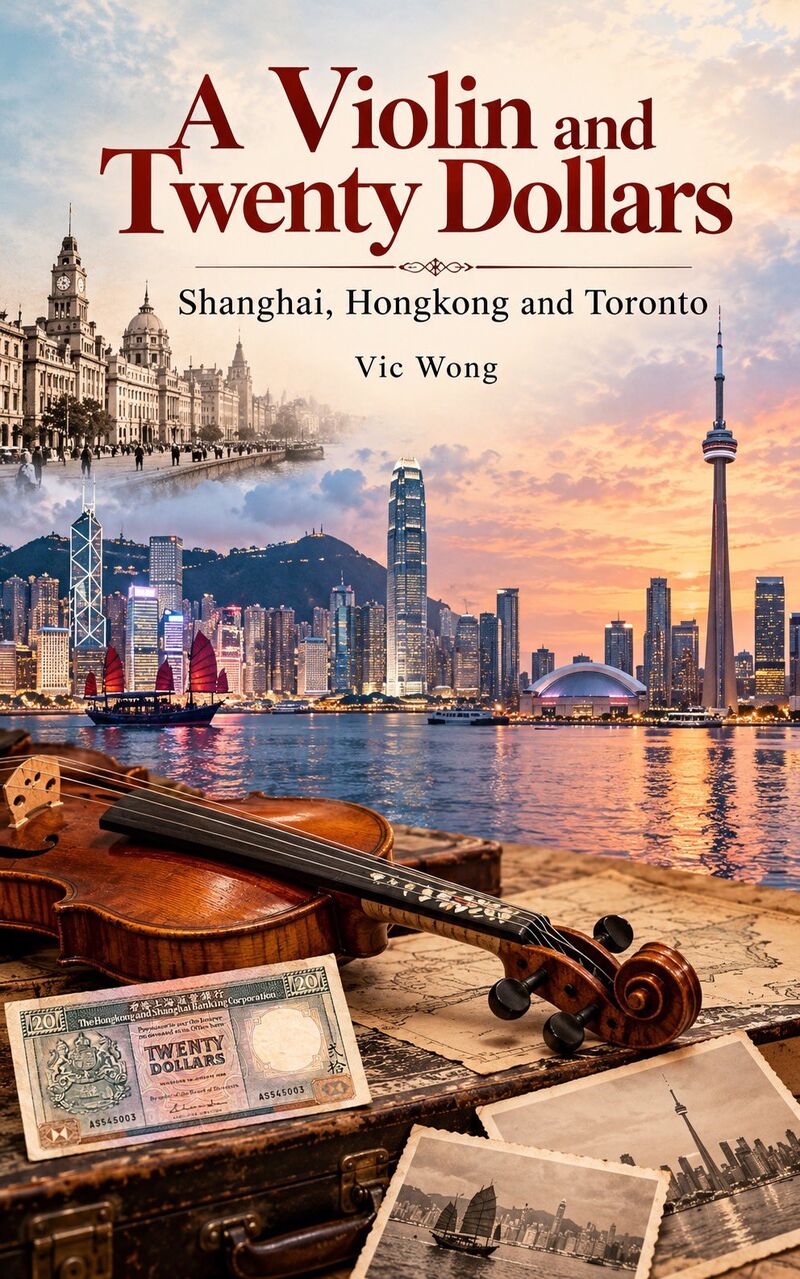
I had twenty Hong Kong dollars in my pocket. That was all the foreign currency a person like me was allowed to exchange. I had run around for days, to several different offices, collecting several different red seals, to get those twenty dollars. I remember the exchange rate exactly: twenty-six fen of Renminbi for one Hong Kong dollar.
Note — In 1979, HK$20 was worth approximately US$4.
I didn’t know yet what twenty dollars could buy in Hong Kong. I would find out within a few hours.
Before I left, people who cared about me came to see me off. Everybody had heard that RMB was useless in Hong Kong, so they gave me what they thought was useful. Somebody pressed national grain coupons into my hand. Somebody else said no, no, in Hong Kong you would need the international grain coupons. Nobody knew. I certainly didn’t.
Note — Grain coupons were required, along with money, to buy rice, flour and other staple foods in China.
I honestly could not tell you whether Hong Kong people needed ration coupons to buy rice. That was how much we knew about the place on the other side of the bridge. We had heard of it. We had seen, at most, a few photographs. And we were sending a young man there with a few grain ration coupons in his pocket that nobody would accept.
I also had a slip of paper with a name, a telephone number and an address. The name belonged to my maternal grandfather. I had never met him. Until a few years before, I hadn’t even known he existed.
And I had the violin. German-made. Mother-of-pearl flowers inlaid on both the fingerboard and the tailpiece. Even if nobody ever played it, it was a beautiful object. In Shanghai it was worth more than a thousand yuan, which in those days was a number that made people go quiet.
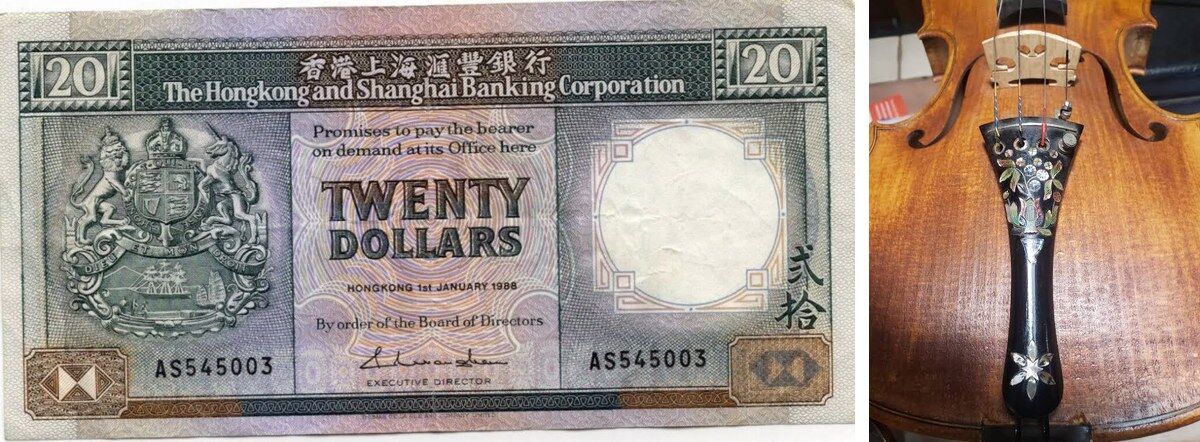
It was not there as a souvenir. It was my insurance. If Hong Kong didn’t feed me, I could play in a bar, or stand on a street corner with the case open and hope people dropped coins in it. My father had put it more simply. If you can’t make it, sell the violin and buy a plane ticket home.
All through the long train ride south, and all through the endless business of crossing the border, I held that violin in my arms. I didn’t trust a rack. I didn’t trust a stranger. I didn’t trust myself to put it down.
A name I didn’t recognize
On the Hong Kong side there was a big waiting hall, and it was full. People from every part of the country sat there with their bundles and their papers, all waiting for the same thing.
I arrived very early that morning, and by noon I was already very hungry. Luckily, at lunchtime someone came round and handed everyone a boxed meal. A free lunch provided by the Hong Kong government. I ate it, and I kept waiting.
The afternoon went on. People were called, stood up, and left. I started to feel the officials would be going home soon and I still hadn’t been called.
Then I found out why.
They had been calling my name for a long time. Over and over, on the loudspeaker. But they were calling it in Cantonese, and I didn’t speak a word of Cantonese. The sounds coming out of that speaker had nothing to do with me. As far as I was concerned, “that person” was somebody else.
I think about that a lot now. The first thing Hong Kong did was call my name. And I didn’t know it was me.
What I didn’t know yet
I have had a long time to think about what happened on the other side of that bridge. If you asked me today to sum up Hong Kong in one line, I would give you the one the Hong Kong people gave me: No one asks where a hero comes from (英雄不论出身). A person’s worth is measured by what they can do, not where they come from.
In Hong Kong, nobody cares how you arrived. Did you hide on a freight train? Swim across the bay? Climb over the hills? Walk across a broken bridge with a pass on thick paper? Doesn’t matter. You are here, so you are a Hongkonger. Nobody asks who your father is or which school you went to. They ask one thing: what can you do?
But I didn’t know that rule yet. That morning I did not feel like a hero of anything. I felt like what I was: A young man from Shanghai, already an adult, holding too many bags, who could not understand his own name.
I had no diploma. I had no family money. I had no connections. I had a violin I was not allowed to sell unless things got very bad, and twenty dollars I was about to lose.
In my head, the questions were very simple. Where do I sleep tonight? What do I eat tomorrow? How long can a person live on twenty dollars? Could someone like me actually make it here?